
The Symmetry Photo Dare: Find the Perfect Balance Hiding in Plain Sight
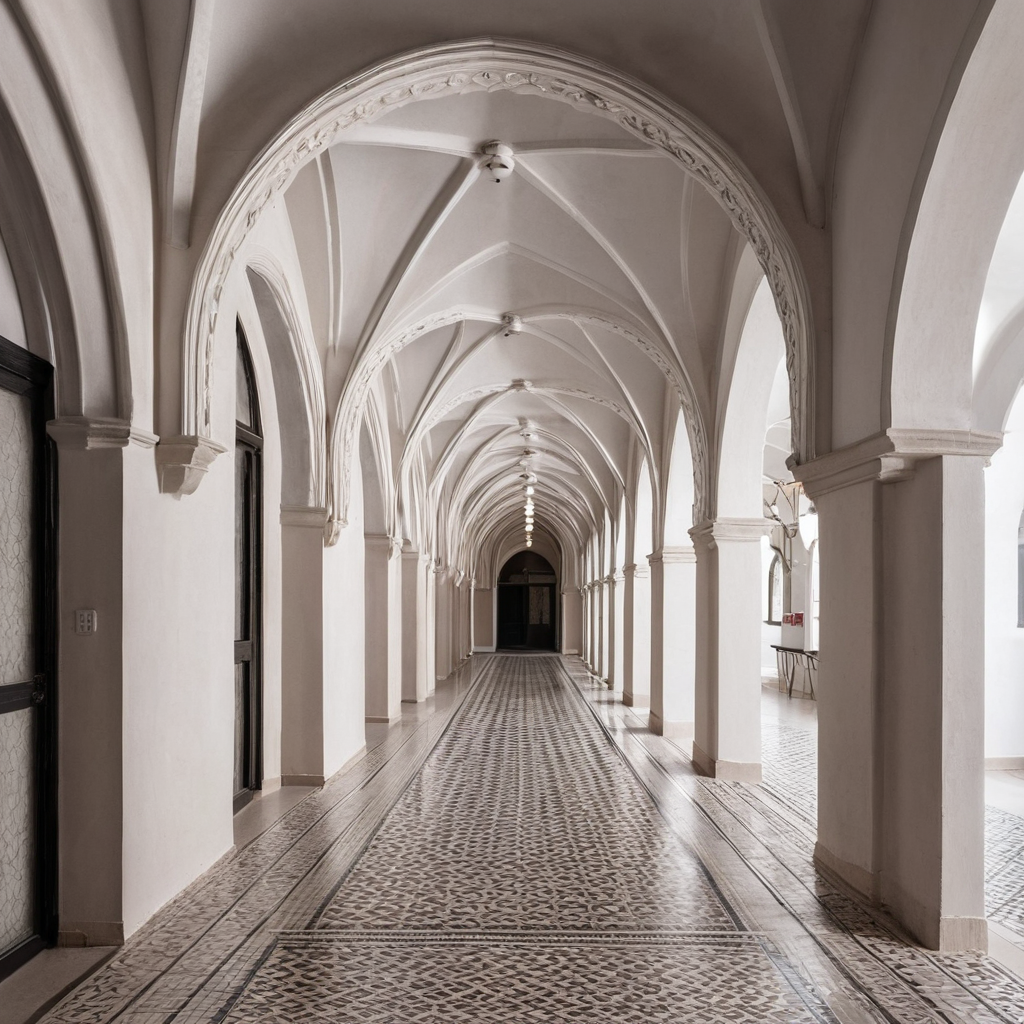
Symmetry is the cheat code of composition. It makes a photo feel deliberate, calm and almost hypnotic — and you can find it within a five-minute walk of wherever you're sitting right now. This week's photo dare is to go hunt it down and shoot it properly.
Here's the dare: find three real-world symmetries and photograph each one from dead-centre. Not "kind of straight." Dead-centre. Perfectly level. The whole point is that the precision is the story.
Why symmetry is worth chasing
Human brains are wired to notice balance. A perfectly mirrored frame reads as intentional and satisfying, which is why symmetry shows up in architecture photography, album covers and film posters. It's also one of the few compositions where the "rules" are brutally simple: find the axis, put your lens exactly on it, and hold still.
The catch is that symmetry is unforgiving. Half a centimetre off and the shot looks sloppy instead of striking. That's the skill this dare trains — patience, alignment, and the discipline to re-shoot until it's right.
Where to find symmetry (a starter list)
- Stairwells and escalators. Looking straight up or straight down a stairwell is the classic. Spiral stairs are even better.
- Tiled floors and ceilings. A long corridor with repeating ceiling lights gives you a built-in vanishing point.
- Arched doorways and colonnades. Old buildings, train stations, museums, covered walkways.
- Bridges and underpasses. Concrete symmetry is everywhere and nobody photographs it.
- Shelving and grids. A library aisle, a supermarket aisle shot straight down the middle, stacked crates.
- Windows and facades. Shoot a building face-on from across the street — the windows do the work.
- Nature's cheap version. A leaf's veins, a sliced fruit, a flower head shot from directly above.
- At home. A table setting from overhead, a chessboard, a stack of books, cutlery laid out.
How to actually nail the shot
1. Find the axis, then commit. Stand on the centre line. If it's a corridor, you want your lens exactly on the middle seam of the floor. Move in small steps and watch how the frame shifts.
2. Get the camera level. Use your phone's grid overlay or a bubble level. Tilted symmetry looks like a mistake, not a style. Keep the horizon line or the vanishing point dead in the middle of the frame.
3. Use the widest lens you've got, then step back. Wide focal lengths exaggerate the convergence and make the symmetry feel bigger. Don't crop in later — compose it in-camera.
4. Kill the clutter. Move a bin, wait for the person in the yellow coat to walk out of frame, shoot when the corridor is empty. Symmetry dies the moment something breaks the pattern — unless you're doing it on purpose.
5. Shoot the reflection version. A wet pavement, a still puddle, a polished floor, a glass facade at dusk. Half the frame is the real thing, half is the mirror. That's the shot that stops the scroll.
6. Bracket your alignment. Take five frames moving a few centimetres each way. One of them will be the true centre. Delete the rest.
The 3-shot challenge
Don't just take one photo and call it done. This is a photo challenge, so here's the structure:
- Shot 1 — Man-made symmetry. Architecture, stairs, corridor, grid.
- Shot 2 — Small-scale symmetry. Something you can hold or shoot from above: a leaf, a plate, a tool, a flower.
- Shot 3 — Broken symmetry. Same discipline, but deliberately put ONE off-centre element in the frame. A single chair in an empty hall. One red apple in a bowl of green ones. Now the symmetry is a stage and the odd thing is the story.
Post all three. The third one is where the creative prompts get interesting, because you're using the pattern as a frame instead of worshipping it.
Gear notes (nothing fancy required)
Any phone camera will do this dare. If you want to push it further:
- A tripod or a small flexible tripod is the single biggest upgrade — it lets you lock the alignment and shoot long exposures in low light without drift.
- A wide-angle lens exaggerates the converging lines. On a phone, the 0.5x ultrawide is genuinely useful here.
- Shoot in RAW or with grid lines on so you can straighten precisely later without wrecking the detail.
If you're building out a kit, the [gear picks on our shop page](/#shop) cover the basics without the upsell nonsense.
One honest tip before you go
The most common failure isn't gear, it's impatience. People find a beautiful symmetric hallway, take one tilted photo from standing height, and leave. The shot that wins is the one where you kneel, level the phone, wait for the space to clear, and take nine frames to get one.
Give it twenty minutes. Take the dare. Then come back and tell us which of the three was hardest — because we're betting it's the broken one.
And when you've got your shots, drop them in the gallery. The best symmetry frame this week gets pinned to the hall of fame. 📷
📸 DarePicz hall of fame
Shot this dare? Upload your photo and see it in the community gallery.
📸 Gear for your next photo dare
Pick up some prompting cards and a starter kit to make your dares pop. Supporting links keep DarePicz free.