The Macro Photo Dare: Find a Whole World in Ten Centimetres
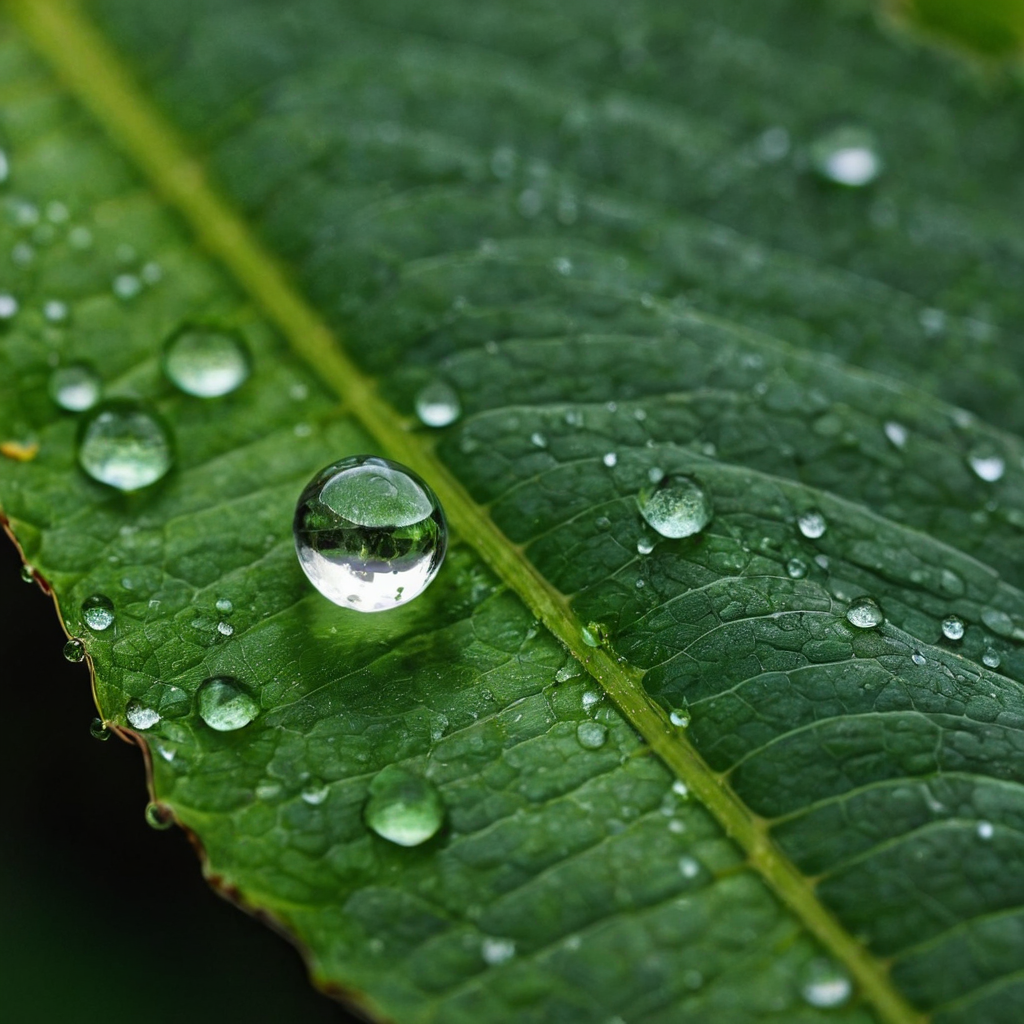
Most people walk past a thousand tiny worlds every day and never see them. A raindrop on a leaf. The weave of a denim jacket. The dust on a windowsill that turns into a galaxy when you get close enough.
This week's photo dare is about shrinking your world down to ten centimetres and seeing what's in there.
The dare: take three macro shots — one water drop or liquid, one texture from something ordinary in your house, and one living thing (a leaf, a flower, an insect, a pet's nose). No macro lens required. A phone, a steady hand and a bit of patience will do it.
Why macro is a genuinely different skill
Every other dare on this site is about where you stand and what you frame. Macro is about proximity — and proximity changes everything. At 1:1 magnification the rules of photography invert:
- Depth of field collapses to millimetres. You can't shoot a whole flower sharp; you choose one petal edge and let the rest melt.
- Light behaves differently. A tiny subject under a hard light blows out instantly; you need soft, controlled light.
- Composition becomes about surfaces and geometry rather than scenes. It's closer to abstract painting than to landscape photography.
That's exactly why it's worth doing. It forces you to slow down and look, which is the whole point of a photo dare.
The gear question — and the honest answer
You do not need a macro lens to start. Here's the ladder, cheapest first:
- Phone, close focus. Most modern phones focus down to 2–10 cm in their main or "macro"/"ultrawide" mode. Get the lens within a few centimetres, tap to focus on the exact point you want, and hold your breath.
- Clip-on macro lens. A cheap clip-on lens for a phone gets you to roughly 10–15x. Image quality is mediocre at the edges but it's a brilliant learning tool.
- Extension tubes on a real camera. A set of cheap tubes between body and lens gets you true macro for very little money. You lose autofocus and some light, which is fine — you'll be focusing manually anyway.
- A real macro lens. If you already have one, use it. 60–105mm is the sweet spot; shorter focal lengths put the lens so close it shadows the subject.
Whatever you use, the same three problems show up: focus, light, and stability.
Focus: the hard part
At macro distances, autofocus hunts and misses. Do this instead:
- Manual focus only. Set focus by moving the camera physically closer or further from the subject. Tiny movements, millimetre by millimetre.
- Use focus peaking or magnification if your camera has it. On a phone, tap the exact point and lock focus (AE/AF lock), then move your body, not the phone.
- Brace everything. Elbows on the table, phone resting on a book, camera on a tripod with the centre column lowered. At macro range, your heartbeat is enough to ruin a shot.
- Shoot a burst and pick the sharp one. Even pros do this. Depth of field is a couple of millimetres — half your frames will be soft.
If your camera supports focus stacking, great, but it's not required. One sharp sliver of a subject is often a stronger image than a fully sharp insect.
Light: small subjects need small, soft light
Hard direct light on a water drop creates a blown-out white blob. What you want is a soft, directional source you can control:
- A window and a sheet of white paper. Diffuse daylight through tracing paper or a thin white cloth. Put a black card behind the subject for a clean background.
- A phone torch with a diffuser. Tissue paper over the torch turns a harsh point light into a usable soft source.
- A cheap LED panel with a diffuser if you're doing this regularly.
- Backlight for liquids. A drop of water lit from behind becomes a lens — you see the whole room refracted inside it. That's one of the most satisfying macro shots there is, and it's free.
Backgrounds matter more than ever at this scale. A sheet of black card, a coloured plastic folder, or a plain wall a few centimetres behind the subject will separate it from clutter. Clutter is death in macro.
What to shoot (a starter list)
- Water on a leaf or a spiderweb. Early morning, after rain, in your garden or a local park.
- A coin, a key, a watch face. The engraving and wear marks become landscapes.
- The weave of fabric — denim, knitwear, a frayed edge.
- A flower's centre, with the stamens as architecture.
- Food: the crumb of bread, a cut chilli, the surface of a strawberry.
- An insect, if you can find one that sits still. Early morning is best — cold insects don't fly.
- Your own skin, hair or an eye — careful with the last one and use a mirror.
- A printed page or a banknote. The dot pattern is astonishing up close.
The three-shot challenge
1. Liquid. One shot where a liquid is the subject — a drop, a splash, condensation, or a backlit droplet with the room inside it.
2. Texture. One shot of an ordinary household object where the texture is the subject. No context, no scene — just surface.
3. Living thing. A leaf, petal, insect or animal detail. Get as close as your gear allows without touching it.
Post them with #DarePiczMacro and tell us what the object was — half the fun is the reveal.
The mistakes that will waste your afternoon
- Shooting in direct sun. Wait for cloud, or diffuse the light.
- Trying to get everything sharp. You can't. Choose your focal plane and commit.
- Hand-holding at 1:1 in dim light. Either add light or brace the camera.
- Ignoring the background. A beautiful subject against kitchen clutter is a snapshot, not a photo.
- Chasing perfection on the first frame. Macro rewards persistence. The tenth frame is usually the one.
A note on safety and kindness
Macro puts you on your knees in the dirt, nose to a hedge, sometimes lying flat on a pavement to get a bug at eye level. Wear trousers you don't mind dirtying, watch for traffic when you crouch at the roadside, and don't disturb nests or pick flowers you don't own. If you're shooting an insect, let it go after a minute or two — it's doing important work.
The best macro photographers aren't the ones with the most expensive glass. They're the ones who notice things. This dare is training for that. Go find your ten centimetres.
New here? Start with the [30-day photo dare challenge](/posts/30-day-photo-dare-challenge.html), or try the [texture dare](/posts/texture-photo-dare.html) as a warm-up before you go full macro.
📸 DarePicz hall of fame
Shot this dare? Upload your photo and see it in the community gallery.
📸 Gear for your next photo dare
Pick up some prompting cards and a starter kit to make your dares pop. Supporting links keep DarePicz free.